Showing posts with label Margaret Atwood. Show all posts

Saturday, December 05, 2015

Holiday Gift Suggestions


As I am sure my readers are aware, I like nothing better for the holidays than a nice stack of books.  I hope your holiday is not so busy you won’t have time for reading.  Here are some suggestions for yourself, or the reader in your life.


If you are looking for a good biography, I have one for you.  A couple of years ago, I reviewed Stacy Schiff’s magnificent biography of Cleopatra.  She has taken a new tack in Witches, a history of the Salem Witch trials.  Her ability to tell a story of the lives of these unfortunate individuals, murdered because of superstition, is unsurpassed.

Margaret Atwood’s latest novel, The Heart Goes Last is another jewel in her crown.  I would also recommend A Handmaid’s Tale and Cat’s Eye as must reads by this talented, award winning Canadian writer.

Lauren Groff’s latest work makes my list of suggestions. Fates and Furies is the story of a young couple married right out of college, who struggle to hold their marriage together.  An absorbing and interesting insight into strong relationships.

After reading The Paris Wife by Paula McLain, I could not resist her 2015 novel, Circling the Sun.  Paris is about the women in Hemingway’s life, and Circling the Sun, is a fictional account of the life of Beryl Markham.  For the real scoop on Beryl Markham, I cannot recommend any book higher than her own autobiography, West with the Night. She was an amazing woman who took on roles of aviator and horse trainer, occupations almost exclusively that of men at the time.

The Booker Prize winning author, John Banvile also has a new novel, The Blue Guitar.  I am really looking forward to this one.  He is one of my favorites, and I am nearly half through all of his novels.  Banville is a literary master who is sure to please.

While not for everyone, Jonathan Franzen is a writer’s writer, and working your way through his novels will not be a wasted effort.  His newest, Purity, has been getting great reviews, and you will hear about  it on Likely Stories soon.

The third and final volume of Autobiography of Mark Twain has finally been published.  Along with volumes one and two, we have a whopping 2,100+ pages of detailed information on one of the most fascinating and well-known figures in American literary history.

Finally, as we approach the last season of Downton Abbey, two books about this magnificent series have been published.  Downton Abbey: A Celebration by Jessica Fellows is a beautiful, detailed, and marvelous companion to the series loved by hundreds of millions around the world.  Her uncle, Lord Julian Fellowes, the author of Downton Abbey, has added a foreword.  Caution: the companion contains spoiler alerts for season six.  Jessica also wrote a slim volume, The Wit and Wisdom of Downton Abbey, which has all the funny sayings of the characters.  Both are published by St. Martin’s Press.

All these books are easily available in time for wrapping and holiday cheer.  All merit 5 stars

--Chiron, 12/3/15

Sunday, March 22, 2015

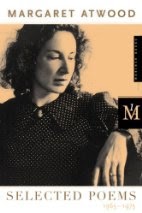
Selected Poems: 1965-1975 by Margaret Atwood


Last year, I reviewed Margaret Atwood's latest book, of short stories, The Stone Mattress.  That excellent collection made me wonder why I had neglected this favorite writer in preparing my reviews.  I went through my library and picked one of her books I had read a long time ago for a re-read.  I settled on Selected Poems: 1965-1975.

Margaret Atwood was born in Canada on November 18, 1939.  She is a poet, novelist, literary critic, essayist, and environmental activist.  She won the Arthur C. Clarke Award for fiction, and she has been short-listed for the Booker Prize five times and won once for Blind Assassin.  She is also the founder of the Writers Trust of Canada, a non-profit literary organization that seeks to encourage Canada's writing community.  She has published 14 novels, 4 collections of short stories, essays, and three collections of un-classifiable short prose pieces.  While she is best known for her work as a novelist, she has also published 15 books of poetry.  Many of her poems have been inspired by myths and fairy tales, which have bee interests of hers from an early age.

Like most of her works, these selected poems deal with the situations women are forced into solely because of their gender.  One of her more horrific stories, The Handmaid’s Tale, foresees the ultimate result of confining women to a second class status.  These poems frequently address that issue, although she does it with allegory and stinging humor.

In a series entitled, “Circe/Mud Poems,” we find excellent examples of her power as a poet.  Covering 23 pages, these 24 poems include my favorites in the collection.  All are untitled as individual pieces. Atwood writes, “Through this forest / burned and sparse, the tines / of blunted trunks, charred branches // this forest of spines, antlers / the boat glides as if there is water // Red fireweed splatters the air / it is power, power / impinging, breaking over the seared rocks / in a slow collapse of petals // You move within range of my words / you land on the dry shore // You find what there is.” (201).

The second, quickly gets down to business.  “Men with heads of eagles / no longer interest me / or pig-men, or those who can fly / with the aid of wax and feathers // or those who take off their clothes / to reveal other clothes / or those with skins of blue leather // or those golden and flat as a coat of arms / or those with claws, the stuffed ones / with glass eyes; or those / hierarchic as greaves and steam engines. // All these I could create, manufacture, / or find easily: they swoop and thunder / around the island, common as flies, / sparks flashing, bumping into each other, // on hot days you can watch them / as they melt, come apart, / fall into the ocean / like sick gulls, dethronements, plane crashes. // I search instead for the others, / the ones left over, / the ones who have escaped from these / mythologies with barely their lives: / they have real faces and hands, they think / of themselves as / wrong somehow, they would rather be trees” (202).

I frequently hear students and interviewers ask, “What does this poem mean?”  The best answer is, “Whatever you think!”  So read these poems and decide for yourself.  No matter an individual’s answer, the power of her words, imagery, and illusions will bring a reader back to Margaret Atwood again and again.  Selected Poems, 1965-1975 is an excellent place to begin exploring the mind of this amazing woman writer.  5 stars

--Chiron, 3/11/15

Saturday, October 25, 2014

The Stone Mattress: Nine Tales by Margaret Atwood


I once drove about six hours from Philadelphia to Boston to hear Margaret Atwood read from her then latest novel, Cat’s Eye.  Set in Toronto, the book was her first novel after A Handmaid’s Tale.  Atwood is a writer I collect assiduously, because I have never read anything she has written that I have not thoroughly enjoyed.  Stone Mattress: Nine Tales is her latest work.  The peculiar title intrigued me, and I want ted to read simply to find out about a stone mattress.  This title story did that and so much more.

All nine stories focus on relationships between men and women.  The first three were lots of fun, since they detail the story of Gavin, a mediocre poet, who did have some early success, and three of his partners.  In the first, “Alphinland” is narrated by Constance, Gavin’s first.  She is a writer, who has penned a popular series of fantasy tales set in Alphinland.  Gavin disdained her work when they were married, but the popularity of the stories has provided Constance with a comfortable lifestyle.  She has put all her friends, family, and Gavin into the stories with only the thinnest of disguises.  Aging rapidly, she wanders around her apartment listening for the voice of her recently departed mate, Ewan.  The voice helps her remember things, such as “take a flashlight” when she walks through a storm to buy some food in a town with no power.  Atwood writes, “What they didn’t understand was that – increasingly – she did take it seriously.  Alphinland was hers alone.  It was her refuge, it was her stronghold; it was where she could go when things with Gavin weren’t working out.  She could walk in spirit through the invisible portal and wander through all the darkling forests and over the shimmering fields, making alliances and defeating enemies, and no one else could come in unless she said they could because there was a five-dimensional spell guarding the entryway” (22).

The second story, “Revenant,” describes Gavin’s last wife, Reynolds.  She tries to keep up Gavin’s reputation, but he is a crusty, mean old man, who does not want the attention.  Reynolds sets up an interview with a graduate student, believing she was interested in Gavin’s poetry.  To his dismay, Naveena’s thesis involves the Alphinland stories, and she wants to confirm the alter ego of Gavin.  Gavin discovers Reynolds has sold his papers to a university.

The third story involves Jorrie a former partner of Gavin, who reads his obituary in the paper.  She decided to attend the ceremony, and discovers all three women are present.  Lots of awkward fun there!

The last two stories, “Stone Mattress” and “Torching the Dusties,” round out the collection and end this marvelous book with two exciting stories.  Sorry, no spoiler alerts!  Read the collection and find out exactly what a “stone mattress” is, and then end up with a thrill ride nearly reminiscent of her great novel, A Handmaid’s Tale.”  

Stone Mattress: Nine Tales will make many readers fans of Margaret Atwood.  The visit to The Harvard Bookstore Café ended with a half dozen of her novels in my collection signed.  And it was worth every mile I drove.  5 stars

--Chiron, 10/12/14

Saturday, June 20, 2009

The Tent by Margaret Atwood

A publisher’s blurb on the back cover of the paperback edition calls this book “A delightfully pointed mélange of fictional pieces.” But I disagree. These short – sometimes funny, sometimes sad, but always poignant – pieces are far too poetic to deserve the title of “fictional pieces.”

I love Margaret Atwood. I have loved her since I read The Handmaid’s Tale some 20 plus years ago. I loved her when I drove six hours in an old, beat-up Chevy toting a pile of books to hear her read at the Harvard Book Store Café in Boston. She graciously signed all eight, and she smiled, and she thanked me, and I loved her more.

Shamefully, I have not read much by her the last couple of years, but The Tent is the first step in remedying that situation. This slim volume contains so many of her thoughts and musings, her streams of consciousness, so much of her humor, her intelligence, I hardly know where to begin describing anything on these pages.

My favorite piece is the eponymous entry, and it begins:

“You’re in a tent. It’s vast and cold outside, very vast, very cold. It’s a howling wilderness…But you have a candle in your tent. You can keep warm” (143).

“The trouble is, your tent is made of paper. Paper won’t keep anything out. You know you must right on the walls, on the paper walls, on the inside of your tent. You must write upside down and backwards, you must cover every available space on the paper with writing” (144).

“Wind comes in, your candle tips over and flares up, and a loose tent-flap catches fire, and through the widening black-edged gap you can see the eyes of the howlers, red and shining in the light from your burning paper shelter, but you keep on writing anyway because what else can you do?” (146).

I guess the paper tent could not protect her from fans toting bags of books either. Get this book and read it now. That’s an order! 5 stars.

--Chiron, 6/21/09