Showing posts with label poetry. Show all posts

Saturday, February 13, 2016

Hide and Seek by Christopher Morley


Whenever I travel, I love searching out used bookstores to ferret out hidden treasures – in my mind at least – for my library.  Over Christmas, I visited the Old Tampa Book Store in Florida.  I found several “treasures,” including the novel I needed to complete my collection of Henry Green, Concluding, which I recently reviewed on Likely Stories.  But the best find was a slim volume of poetry by Christopher Morley, Hide and Seek.

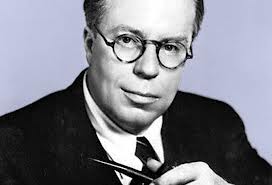
Christopher Morley wrote for the Philadelphia Evening Public Ledger in 1918.  He turned to novels, and The Haunted Bookshop is my favorite.  Actually, I had no idea he wrote poetry.  The book I found in Tampa was not only inscribed, it included a note to David E. Smiley, editor of the Public Ledger.  In addition, Morley corrected a typographical error in his own hand with the same ink as that in the inscription.  As an inveterate Philadelphian, I doubled the pleasure in finding this book.

The poetry is light, but Morley had an ability turn a phrase.  Here is one of my favorites, “A Wedded Valentine”:  “Dear, may I be your Valentine? / Not just to-day, in weather fine; / Not just to-day, in lover’s mood, /But through life’s each vicissitude. // Not just when girlish eyes still shine, / Dear, may I be your Valentine, / But through all mortal whims and fits / While Time our human fibres (sic) knits. // And though, most sweet, my peevish earth / Is hardly such promotion worth, / Dear, May I be your Valentine / And learn to make your virtue mine? // Recalling by love’s old refrain / Our Double joy, divided pain, I write this pleading, smiling line-- / Dear, may I be your Valentine?” (27)

And another short poem, “The Intruder”: “As I sat, to sift my dreaming / To the meet and needed word, / Came a merry Interruption / With insistence to be heard. // Smiling stood a maid beside me, / half alluring and half shy; / Soft the white hint of her bosom-- / Escapade was in her eye. // ‘I must not be so invaded,’ / (In anger then I cried) -- / ‘Can’t you see that I am busy? / Tempting creature, stay outside! // “Pearly rascal, I am writing: / I am now composing verse-- / Fie on antic invitation: / Wanton, vanish – fly – disperse! // ‘Baggage, in my godlike moment / What have I to do with thee”’ / And she laughed as she departed -- / ‘I am poetry,’ said she” (47).  I love these little poems that I can nibble at enjoy in a moment.  Here is another, “Tit for Tat”: “I often pass a gracious tree / Whose name I can’t identify, / But still I bow, in courtesy; / It waves a bough, in kind reply. // I do not know your name, O tree / (Are you a hemlock or a pine?) / But why should that embarrass me? / Quite possibly you don’t know mine” (50). 
I have always had greater appreciation for trees after I read The Wild Trees by Richard Preston a few years ago.  But even this little acorn – or should I say pinecone – of a poem, brings a smile from me.  Among a series of sonnets, he writes this paen to my hometown, “In Philadelphia”: “I have seen sunsets gild the pillared steam / Where Broad Street Station hoops with arches dark / The western fire; and seen the looming, stark / Crags of the Hall grow soft in morning gleam. / One drowsy eve I wandered far to mark / The neck, a land of opal color-scheme; / And know no fairer place to watch and dream / Than on a bench in old Penn Treaty Park. // And there are corners, glimpses, houses, streets, / With curious satisfaction in the view, / And unconfessed sweet moments when one meets / the destiny of human life anew. / A city rarely beautiful I know … / It is not men alone who make it so” (80). 

I grew up a short walk from Penn treaty Park, and the first time I went on a long walk alone, I found myself at that very spot.  I did sit on a bench to read a bit, not knowing who sat there before me, or that I would ever stumble on his poems four decades or more later.  Almost certainly out of print, Hide and Seek is a gem I will treasure to the end of my days.  5 stars

-- Chiron, 1/30/16

Friday, January 15, 2016

The Robot Scientist's Daughter by Jeannine Hall Gailey


Jeannine Hall Gailey was my mentor and model for poetry through my MFA.  She liked my poetry, and I admired hers.  She has recently published a collection of poems that deal with her childhood near the Oak Ridge National Laboratory (ORNL), birthplace of the nuclear age.  She details the horrific side effects she, and the nearby residents, suffered as deadly poisons such as cesium, strontium, plutonium, and uranium turned plants, animals, crops, cow’s milk and even mud daubers into deadly vectors of those poisons, leading to cancer, leukemia, and whole host of physical ailments.


Jeannine served as the poet laureate of Redmond, Washington, and her poetry has appeared NPR’s Writer’s Almanac, The American Poetry Review, The Iowa Review, and Prairie Schooner.  The Robot Scientist’s Daughter is her fourth collection of poems.  She grew up near ORNL, where her father worked on robots to deal with nuclear waste.  Her childhood home now lies under a gigantic concrete slab.


As we struggle to end reliance on fossil fuels for our energy, many advocated the construction of nuclear power plants as a substitute.  No matter how safe, accidents can, do, and will occur.  Even aside from those problems, the disposal of nuclear waste has not been settled to everyone’s satisfaction.  Poetry is the perfect place to explicate these problems.  The sadness and the emotion and the difficulties Jeannine experiences are a warning to us all.  Gailey never plays on our fears, however.  She handles her situation with grace and notes of caution.


I liked many of the poems in this collection, but one stood out for me among all my favorites.  In graduate school, I briefly flirted with chaos theory as applied to literature.  In her poem, “Chaos Theory,” she writes, “Elbow deep in the guts of tomatoes, / I hunted genes, pulling strand from strand. / DNA patterns bloomed like frost.  Ordering / chaos was my father’s talisman; he hated./.imprecision, how in language the word./.is never exactly the thing itself. // He told us about the garden of the janitor / at the Fernald Superfund site, where mutations burgeoned / in the soil like fractal branching.  The dahlias and tomatoes / he showed to my father, doubling and tripling in size / and variety, magentas, pinks, and reds so bright / they blinded, churning offspring gigantic and marvelous./.from that ground sick with uranium.  The janitor smiled / proudly.  My father nodded, unable to translate / for him the meaning of all this unnatural beauty. // In his mind he watched the man’s DNA unraveling, / patching itself together again with wobbling sentry / enzymes.  When my father brought this story home, / he never mentioned the janitor’s slow death from radiation / poisoning only those roses, those tomatoes.” (33).


I can only hope that when we do free ourselves from fossil fuels, we do not insert deadly poisons into our land, sky, water, crops, animals, and our lungs.  In his monumental work, Poetics, Aristotle wrote, “Poetry is something more philosophic and of graver import than history, since its statements are of the nature of universals, whereas those of history are singulars.”  I believe this sums up Jeannine Hall Gailey’s latest collection, The Robot Scientist’s Daughter perfectly.  She uses the “singular” event of poisoning our planet a cautionary tale of the widespread and deadly effects of nuclear power. 


Take up some, or better yet all, of Gailey’s work, and perhaps you will have a different view of our world and the safety of our planet.  5 stars


--Chiron, 1/17/16

Sunday, November 08, 2015

Letting Me In by Anne McCrady


According to the profile in the East Texas Writer’s Guild, Anne McCrady’s poetry and creative non-fiction have appeared internationally in literary journals, anthologies and magazines.  Her two poetry collections have both been prize winners, as have dozens of her single poems. Besides her writing, editorial and review publication credits, Anne offers keynotes, workshops, retreat programs, inspirational presentations and events in support of poetry, storytelling, community organizations and peace.  Anne lives in Henderson, Texas with her husband, Mike, and she is the founder of InSpiritry, where she is “Putting Words to Work for a Better World.”

I met Anne McCrady at a poetry workshop a few years ago, and immediately felt a connection to her poetry.  In her latest collection, Letting Myself In, she deals cleverly with tremendously visual descriptions of worlds and lives in transition.  She captures the feel and the emotions of East Texas and the people who live and struggle to reach their dreams.

Many of her poems have become favorites of mine, so choosing which to quote for this review was not easy.  The second poem in the collection personally struck me close to my own view of my life.  The poem is “Aubade,” which is a poem reflecting on the dawn.  She writes, “Of all the time to travel / a new road, why choose now? / How hard it will be / to move from the hearth / just as logs are being hauled inside, / how odd to life from the hook / beside the door, my jacket -- / its weight an informal burden / on my September shoulders. // Turning to go, / I cannot think / what to take along: / a map, a dog, my books. / Maybe it is better / to travel light, / off on my own this time, / each step a reluctant soldier’s song / of how hard – oh, how hard – it is to leave home” (5).  I do a lot of traveling to visit far flung family members these days, and this poem felt like a warm breeze leading me down the road. 

Another favorite is "October Rain.”  McCrady writes, ‘In the garden, / leftover moisture clings / to bits of fading growth, / pools on cool, curled vines, / drips in strands of pearls / to the soggy earth beneath. // Time is muffled. / Day cannot climb out / of dawn’s damp blanket. / With no breeze, settled, / wood smoke sleeps in. / Live oak flags hang slack, / and pine boughs wait for word. // For now things can wait. / Like circling geese, / life and clouds float patiently / watching for signs / of a good, hard blow . to dry out the coming day / and open up a clear, cold sky” (13).

“Putting words to work,” is an excellent motto for the poetry of Anne McCrady.  Her collection is a warm, calming, and seductive exploration of the world we live in.  Letting Myself In will have that effect on you.  5 stars.

--Chiron, 11/8/15

Saturday, May 30, 2015

A Child's Garden of Verses by Robert Louis Stevenson, illustrated by Tasha Tudor


Over the years, I have heard a number of authors mention the poetry of Robert Louis Stevenson, and none were more impressive than the mention and admiration of the renowned poet, W.S. Merwin.  In an interview a few years ago with Bill Moyers, he recounted how his mother read to him every night.  He especially loved A Child’s Garden of Verses by Robert Louis Stevenson.  I have been coveting a copy of this collection for some time, but somehow, other things always got in the way.  While wandering through the offerings of Amazon, I came across a copy illustrated by none other than the marvelous children’s book illustrator, Tasha Tudor.  The book arrived today, and I dropped everything to read it aloud, as Merwin suggested.  Some of these poems sounded vaguely familiar, although I cannot recall my mother reading me any poetry.  She liked stories, and so did I.

This simple and endearing collection is a wonderful way to introduce children to the magic and beauty of poetry.  Here is an example of one I vaguely remember from my childhood, “Bed in Summer”:

In winter I get up at night
And dress by yellow candle-light.
In summer, quite the other way,
I have to go to bed by day.

I have to go to bed and see
The birds still hoping on the tree,
Or hear the grown-up people’s feet
Still going past me in the street.

And does it not seem hard to you,
When all the sky is clear and blue,
And I should like so much to play,
To have to go to bed by day? (10).

Another brief poem I especially liked was “Looking Forward”:

When I am grown to man’s estate
I shall be proud and very great,
And tell the other girls and boys
Not to meddle with my toys.” (18).

Of course, I would make one minor change – the last word should now be “books.”  Robert Louis Stevenson’s collection, A Child’s Garden of Verses is an enchanting source for reading to children and helping them understand the beauty and playfulness of verse.  The delightful illustrations by Tasha Tudor, the renowned children’s book illustrator, only adds to the experience.  5 stars.

--Chiron, 5/25/15

Sunday, March 22, 2015

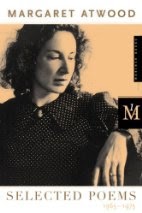
Selected Poems: 1965-1975 by Margaret Atwood


Last year, I reviewed Margaret Atwood's latest book, of short stories, The Stone Mattress.  That excellent collection made me wonder why I had neglected this favorite writer in preparing my reviews.  I went through my library and picked one of her books I had read a long time ago for a re-read.  I settled on Selected Poems: 1965-1975.

Margaret Atwood was born in Canada on November 18, 1939.  She is a poet, novelist, literary critic, essayist, and environmental activist.  She won the Arthur C. Clarke Award for fiction, and she has been short-listed for the Booker Prize five times and won once for Blind Assassin.  She is also the founder of the Writers Trust of Canada, a non-profit literary organization that seeks to encourage Canada's writing community.  She has published 14 novels, 4 collections of short stories, essays, and three collections of un-classifiable short prose pieces.  While she is best known for her work as a novelist, she has also published 15 books of poetry.  Many of her poems have been inspired by myths and fairy tales, which have bee interests of hers from an early age.

Like most of her works, these selected poems deal with the situations women are forced into solely because of their gender.  One of her more horrific stories, The Handmaid’s Tale, foresees the ultimate result of confining women to a second class status.  These poems frequently address that issue, although she does it with allegory and stinging humor.

In a series entitled, “Circe/Mud Poems,” we find excellent examples of her power as a poet.  Covering 23 pages, these 24 poems include my favorites in the collection.  All are untitled as individual pieces. Atwood writes, “Through this forest / burned and sparse, the tines / of blunted trunks, charred branches // this forest of spines, antlers / the boat glides as if there is water // Red fireweed splatters the air / it is power, power / impinging, breaking over the seared rocks / in a slow collapse of petals // You move within range of my words / you land on the dry shore // You find what there is.” (201).

The second, quickly gets down to business.  “Men with heads of eagles / no longer interest me / or pig-men, or those who can fly / with the aid of wax and feathers // or those who take off their clothes / to reveal other clothes / or those with skins of blue leather // or those golden and flat as a coat of arms / or those with claws, the stuffed ones / with glass eyes; or those / hierarchic as greaves and steam engines. // All these I could create, manufacture, / or find easily: they swoop and thunder / around the island, common as flies, / sparks flashing, bumping into each other, // on hot days you can watch them / as they melt, come apart, / fall into the ocean / like sick gulls, dethronements, plane crashes. // I search instead for the others, / the ones left over, / the ones who have escaped from these / mythologies with barely their lives: / they have real faces and hands, they think / of themselves as / wrong somehow, they would rather be trees” (202).

I frequently hear students and interviewers ask, “What does this poem mean?”  The best answer is, “Whatever you think!”  So read these poems and decide for yourself.  No matter an individual’s answer, the power of her words, imagery, and illusions will bring a reader back to Margaret Atwood again and again.  Selected Poems, 1965-1975 is an excellent place to begin exploring the mind of this amazing woman writer.  5 stars

--Chiron, 3/11/15

Saturday, February 14, 2015

Becoming the Villainess by Jeannine Hall Gailey


Jeannine Hall Gailey is the Poet Laureate Emeritus of Redmond Washington.  Garrison Keilior featured her work on The Writer’s Almanac.  I reviewed her third book of poetry, Unexplained Fevers, in 2013.  She has won numerous awards, and her works has appeared in The Iowa Review, American Poetry Review, and Prairie Schooner.  Becoming the Villainess is her first collection.

As I wrote in 2013, Jeanine Hall Gailey’s third book of poetry, Unexplained Fevers, helps the heroes and heroines of fairy tales step out of the towers and oppressive households.  She uses these poems as allegories for the problems facing many people today.  In Becoming the Villainess, she dips into the world of comic book superheroes and their exaggerated physical features.  She writes, in the poem, “Female Comic Book Superheroes” “are always fighting evil in a thong, / pulsing techno soundtrack in the background / as their tiny ankles thwack // against the bulk of male thugs. / They have names like Buffy, Elektra, or Storm / but excel in code decryption, Egyptology, and pyrotechnics. // They pout when tortured, but always escape just in time, / still impeccable in lip gloss and pointy-toed boots, / to rescue male partners, love interests, or fathers. // Impossible chests burst out of tight leather jackets, / from which they extract the hidden scroll, antidote, or dagger, / tousled hair covering one eye. // They return to their day jobs as forensic pathologists, / wearing their hair up and donning dainty glasses. / Of all the goddesses, these pneumatic heroines most // resemble Artemis, with her miniskirts and crossbow, / or Freya, with her giant gray cats. / Each has seen this apocalypse before. // See her perfect three-point landing on top of that chariot, / riding the silver moon into the horizon, / city crumbling around her heels” (5).  She spans the objectification of woman from the Ancient Greeks through the Germanic tribes to the teenage boys spending hours before a video console.  Some things never change.

My favorite of this collection, “Alice in Darkness,” deftly manages to put a favorite children’s story into a more realistic venue.  She writes, “Forget tears.  Chasing / white animals with timepieces / in this drug-trip landscape / can only lead to more of same. / Hedgehogs, playing cards, paintbrushes: / full of undisclosed danger. / Didn’t your mother tell you / not to kiss strangers? / That Cheshire smile shouldn’t fool you. / Pull your skirt down. / Your nails are growing so fast / you’re hardly human. / Alice, fight your version of bedlam / as long as you can. / Sleep the sweet dream away / from that gooey looking glass, or mushrooms, / or the fear of your own body. / Forget what the night tastes like. / Stop wondering (sic) through the shadows, / holding your neck out / for the slice of the axe” (3).

Jeannine Hall Gailey’s first collection, Becoming the Villainess, foreshadows the wonderfully inventive and pleasing poems which would come later.  I sense a note of humor flowing from her experiences as a woman growing up in America today.  She has a fourth volume coming soon – The Robot Scientist’s Daughter --- and I look forward to seeing what she does with science fiction.  Five stars

--Chiron, 2/6/15