
One of the benefits of a book club – my club members remind us of this benefit all the time – is discovering novels, writers, non-fiction, and poetry, we might never have considered. If I tried to list all the books I have read, only because a fellow member recommended them, I would drown in the tsunami of books that followed some of these writers. The Architect’s Apprentice by Elif Shafak is the latest addition to this ever growing flood.
Elif has won awards, she is a bestseller, and – more importantly – the most widely-read author in Turkey. She is also a champion of women’s rights and freedom of expression. No small tasks in today’s Turkey. Apprentice is her seventh novel, and you know what that means to my voracious collecting habits. She has been translated into more than 40 languages, and she currently divides her time between Istanbul and London. You will hear about Shafak from me again.
When I first started to read this novel, my mind instantly flashed back to Jose Saramago’s wonderful tale, The Elephant’s Journey. Saramago based his novel on an historical event that occurred in the 16th century. King João III of Portugal has decided to present his cousin, Archduke Maximilian of Vienna, an elephant, Solomon, as a wedding present. The mahout, Subhro, who cares for the beast in a broken down corner of the king’s zoo, guides the elephant and a troop of workers and soldiers, on a trek across Europe during the Reformation and amid various conflicts.

Shafak’s tale is of an magnificent white elephant, named Chota, sent from India to Istanbul and the sultan of the Ottoman Empire. A twelve-year-old boy, Jahan, befriends Chota and becomes his mahout. His life changes when he meets the Sultan’s daughter, Princess Mihrimah, and together they are spellbound by the elephant and each other. Jahan begins his education in the palace, and comes to the notice of Mimar Sinan, the empire’s chief architect. Mimar Sinan, an historical figure, built some of the most spectacular buildings in the empire,many of which still stand. Jahan becomes one of Sinan’s four apprentices. Even in this close group, danger lurks.
The novel opens with
these lines, “”Of all the people God created and Sheitan led astray, only a few
have discovered the Centre of the Universe – where there is no good and no
evil, no past and no future, no ‘I’ and no ‘thou,’ no war and no reason for
war, just an endless sea of calm. What
they found there was so beautiful that they lost the ability to speak. // There
were six of us: the master, the apprentices and the white elephant. We built everything together. Mosques, bridges, madrasas, caravanserais,
alms houses, aqueducts” (1-2).

 The novel is a story
of creativity and artistic freedom, science vs. ignorance. The novel overflows with interesting
characters from Gypsies, to heretics, prostitutes, Sufis, royalty, and common
laborers – including Muslims, Christians, and Jews – and not to forget the
treachery, revenge, jealousy, murder, and myriad palace intrigues.
The novel is a story
of creativity and artistic freedom, science vs. ignorance. The novel overflows with interesting
characters from Gypsies, to heretics, prostitutes, Sufis, royalty, and common
laborers – including Muslims, Christians, and Jews – and not to forget the
treachery, revenge, jealousy, murder, and myriad palace intrigues.
When I first opened this 416-page work, I hoped I would be able to finish in time for our club meeting. I sat down on a Thursday afternoon and quickly read 75 pages. By Sunday afternoon, I barely had 40 left – it really and truly was that good. The Architect’s Apprentice by Elif Shafak is a tale as splendid as the mosques, palaces, and other buildings Jahan and Mimar designed and built together. A must read! 5 stars.

One of my guilty pleasures was the Chelsea Handler Show. The humor was rough, and she held nothing back in expressing her views on politics, religion, sports, or a myriad of other targets of her caustic wit. Her books are largely autobiographical, and she doesn’t even spare her own family. Her recent book, Uganda Be Kidding Me hilariously describes her trip to East Africa. I laughed so hard, my face hurt. Here is Chelsea’s description of the beginning of their flight to Africa. She writes, “I was asleep before the plane even took off. I had told the pilot I was pregnant and suffering from severe motion sickness, and after he agreed to let me turn mu chair into a bed, I ordered one more Bloody Mary, popped a Xanax, and woke up in Dubai. // I like to sleep as much as possible. I like to sleep on planes primarily to avoid technology. My grasp of electronics is commensurate to my grasp of the moon; I’m unclear as to how either arrived at its current status. Nor do I have the attention span or wherewithal to make heads or tails of why I’m so far behind the general populace in accepting the theory of space and time, and its relevance to my own life. On a side note: I find most astronauts to be class A narcissists” (13). I have serious doubts about the levels of her alcohol and drug consumption. I cannot imagine she would be able to function as she does if it were all true.


The novel is a story
of creativity and artistic freedom, science vs. ignorance. The novel overflows with interesting
characters from Gypsies, to heretics, prostitutes, Sufis, royalty, and common
laborers – including Muslims, Christians, and Jews – and not to forget the
treachery, revenge, jealousy, murder, and myriad palace intrigues.
When I first opened this 416-page work, I hoped I would be able to finish in time for our club meeting. I sat down on a Thursday afternoon and quickly read 75 pages. By Sunday afternoon, I barely had 40 left – it really and truly was that good. The Architect’s Apprentice by Elif Shafak is a tale as splendid as the mosques, palaces, and other buildings Jahan and Mimar designed and built together. A must read! 5 stars.
--Chiron, 2/21/16


Saturday, February 13, 2016
Uganda Be Kidding Me by Chelsea Handler
One of my guilty pleasures was the Chelsea Handler Show. The humor was rough, and she held nothing back in expressing her views on politics, religion, sports, or a myriad of other targets of her caustic wit. Her books are largely autobiographical, and she doesn’t even spare her own family. Her recent book, Uganda Be Kidding Me hilariously describes her trip to East Africa. I laughed so hard, my face hurt. Here is Chelsea’s description of the beginning of their flight to Africa. She writes, “I was asleep before the plane even took off. I had told the pilot I was pregnant and suffering from severe motion sickness, and after he agreed to let me turn mu chair into a bed, I ordered one more Bloody Mary, popped a Xanax, and woke up in Dubai. // I like to sleep as much as possible. I like to sleep on planes primarily to avoid technology. My grasp of electronics is commensurate to my grasp of the moon; I’m unclear as to how either arrived at its current status. Nor do I have the attention span or wherewithal to make heads or tails of why I’m so far behind the general populace in accepting the theory of space and time, and its relevance to my own life. On a side note: I find most astronauts to be class A narcissists” (13). I have serious doubts about the levels of her alcohol and drug consumption. I cannot imagine she would be able to function as she does if it were all true.
Chelsea does have her serious side, but she can’t resist even a slight jab at the end. In this part, she writes about her arrival in Africa. “For someone who’s never been more than moderately interested in animals, the place was surreal and, to be honest, borderline amazing. We were transported from a tiny nugget airport by an open-aired jeep to an outdoor lodge, where we were served iced green teas on a tented deck that overlooked a view of the reserve and exposed granite that the river had carved through. Right before our eyes was this majestic landscape filled with brooks, boulders the size of planets, and hippos wading into watering holes while wild elephants called to each other. It was like being on the set of Jurassic Park but with room service” (17).
Chelsea Handler’s Uganda Be Kidding Me is not for everyone, but certainly for her legions of fans, among whom I count myself. 5 stars.
--Chiron, 2/11/16
Chelsea Handler’s Uganda Be Kidding Me is not for everyone, but certainly for her legions of fans, among whom I count myself. 5 stars.
--Chiron, 2/11/16
Slouching toward Bethlehem by Joan Didion
Ages ago, a friend
recommended Miami, an extended essay
by Joan Didion. Try as I might, I could
not keep my mind on the text. Something
about the style drove me away. A page from
my daily Book Lovers Calendar, a comment from my wife, and a book that had
fallen behind a shelf all conspired to my reading Didion’s acclaimed book of
essays, Slouching toward Bethlehem. I decided to give her one more
chance.
>


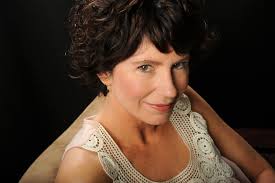 Here is a sample of
her writing as she describes Beryl’s distress as a child when her mother left
Africa for another man, taking her son with her to England. McLain writes, “What [my father] wanted to
know was if I could love this life as he did.
If I could give my heart to this place, even if she never returned and I
had no mother going forward, perhaps not ever. // How could I begin to
answer? All around us, half-empty
cupboards reminded me of the things that used to be there but weren’t any
longer – four china tea cups with gold plated rims, a card game, amber beads
clicking together on a necklace my mother had loved. Her absence was still so loud and so heavy, I
ached with it, feeling hollow and lost.
I didn’t know how to forget my mother any more than my father knew how
to comfort me. He pulled me – long limbed
and a little dirty, as I always seemed to be – onto his lap, and we sat like that
quietly for a while. From the edge of
the forest, a group of hyraxes echoed shrieks of alarm. One of our four greyhounds cocked a sleek ear
and then settled back into comfortable sleep by the fire. Finally my father sighed. He scooped me under my arms, grazed my drying
tears with a quick kiss, and set me on my own two feet” (14). Beryl Markham not only gave her heart to Africa,
but she gave a part of her soul, along with some blood.
Here is a sample of
her writing as she describes Beryl’s distress as a child when her mother left
Africa for another man, taking her son with her to England. McLain writes, “What [my father] wanted to
know was if I could love this life as he did.
If I could give my heart to this place, even if she never returned and I
had no mother going forward, perhaps not ever. // How could I begin to
answer? All around us, half-empty
cupboards reminded me of the things that used to be there but weren’t any
longer – four china tea cups with gold plated rims, a card game, amber beads
clicking together on a necklace my mother had loved. Her absence was still so loud and so heavy, I
ached with it, feeling hollow and lost.
I didn’t know how to forget my mother any more than my father knew how
to comfort me. He pulled me – long limbed
and a little dirty, as I always seemed to be – onto his lap, and we sat like that
quietly for a while. From the edge of
the forest, a group of hyraxes echoed shrieks of alarm. One of our four greyhounds cocked a sleek ear
and then settled back into comfortable sleep by the fire. Finally my father sighed. He scooped me under my arms, grazed my drying
tears with a quick kiss, and set me on my own two feet” (14). Beryl Markham not only gave her heart to Africa,
but she gave a part of her soul, along with some blood.
--Chiron, 1/21/16
>
The first essay,
“Some Dreamers of the Golden Dream,” tells the story of a woman accused of
murdering her husband, who, apparently, suffered from depression and other
ailments and wanted to die. Joan began
the essay with a description of San Bernardino, California, site of most of the
story, when Lucille Miller visited a 24-hour minimart. She writes, “…on the night of October 7, 1964,
[…] the moon was dark and the wind was blowing and she was out of milk, and
Banyan Street was where, at about 12:30 a.m., her 1964 Volkswagen came to a
sudden stop, caught fire, and began to burn.
For an hour and fifteen minutes Lucille Miller ran up and down Banyan Street
calling for help, but no cars passed and no help came. At three o’clock that morning, when the fire
had been put out and the California Highway Patrol officers were completing
their report, Lucille Miller was still sobbing and incoherent, for her husband
had been asleep in the Volkswagen. ‘What
will I tell the children, when there’s nothing left, nothing left in the
casket,’ she cried to the friend called to comfort her. ‘How can I tell them there’s nothing left?’” (6).
Quite a story, but as Didion unwinds the
tale, numerous pieces of evidence do not add up. Miller ends up in the San Bernardino County
Jail charged with first degree murder. I
could not stop reading this 28-page essay.


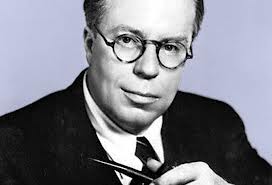 I have always had
greater appreciation for trees after I read The
Wild Trees by Richard Preston a few years ago. But even this little acorn – or should I say
pinecone – of a poem, brings a smile from me.
Among a series of sonnets, he writes this paen to my hometown, “In
Philadelphia”: “I have seen sunsets gild the pillared steam / Where Broad
Street Station hoops with arches dark / The western fire; and seen the looming,
stark / Crags of the Hall grow soft in morning gleam. / One drowsy eve I
wandered far to mark / The neck, a land of opal color-scheme; / And know no
fairer place to watch and dream / Than on a bench in old Penn Treaty Park. //
And there are corners, glimpses, houses, streets, / With curious satisfaction
in the view, / And unconfessed sweet moments when one meets / the destiny of
human life anew. / A city rarely beautiful I know … / It is not men alone who
make it so” (80).
I have always had
greater appreciation for trees after I read The
Wild Trees by Richard Preston a few years ago. But even this little acorn – or should I say
pinecone – of a poem, brings a smile from me.
Among a series of sonnets, he writes this paen to my hometown, “In
Philadelphia”: “I have seen sunsets gild the pillared steam / Where Broad
Street Station hoops with arches dark / The western fire; and seen the looming,
stark / Crags of the Hall grow soft in morning gleam. / One drowsy eve I
wandered far to mark / The neck, a land of opal color-scheme; / And know no
fairer place to watch and dream / Than on a bench in old Penn Treaty Park. //
And there are corners, glimpses, houses, streets, / With curious satisfaction
in the view, / And unconfessed sweet moments when one meets / the destiny of
human life anew. / A city rarely beautiful I know … / It is not men alone who
make it so” (80).
 I first read Jane
Smiley when I read her Pulitzer Prize-winning novel, A Thousand Acres. This novel
was a retelling of Shakespeare’s great tragedy, King Lear. Smiley set her
tale in the mid west, when a patriarch of the family decides to retire and
divides his land among his three children.
Caroline, the youngest and a lawyer, argues against her father’s plan,
and suffers the wrath of her father and her sisters. Lear
is my favorite Shakespeare tragedy, and I thoroughly enjoyed Smiley’s
version. In her latest novel, Some Luck, Smiley weaves a sweeping tale
of four generations of Iowa farmers.
Each chapter covers one year from 1920 to 1953.
I first read Jane
Smiley when I read her Pulitzer Prize-winning novel, A Thousand Acres. This novel
was a retelling of Shakespeare’s great tragedy, King Lear. Smiley set her
tale in the mid west, when a patriarch of the family decides to retire and
divides his land among his three children.
Caroline, the youngest and a lawyer, argues against her father’s plan,
and suffers the wrath of her father and her sisters. Lear
is my favorite Shakespeare tragedy, and I thoroughly enjoyed Smiley’s
version. In her latest novel, Some Luck, Smiley weaves a sweeping tale
of four generations of Iowa farmers.
Each chapter covers one year from 1920 to 1953.
 Normally, I pick a
passage or two from the beginning of a novel for a sample of the writer’s
style. However, this time, I picked a
long paragraph close to the end, which sums up the story, revealing only minor
details of the plot. Rosanna and Walter,
the second generation farmers in the family, are hosting Thanksgiving in
1948. Smiley writes, Rosanna could not
have said that she enjoyed making Thanksgiving dinner for twenty-three people
(a turkey, a standing rib roast, and a duck that Granny Mary brought; ten
pounds of mashed potatoes, and that not enough; five pies; sweet potatoes; more
stuffing than could be stuffed; all the Brussels sprouts from the garden though
they were good after the frost). She
could not say Lillian had control of those children, who were underfoot every
time you took a step, though they were good natured to be sure. Henry scrutinized the dishes of food as
though he were being asked to partake of roadkill, at least until the pies were
served, and Claire burst into tears for no reason at all, but when they all had
their plates in front of them, and a few deep breaths were taken, and first
Andrea, and then Granny Elizabeth, and then Eloise said, ‘This looks
delicious,’ she began to have a strange feeling. She should have sat down – Joe, who was
sitting beside her, moved his chair in a bit – but she didn’t want to sit down,
or eat, at all (what with tasting everything she wasn’t hungry); she just
wanted to stand there and look at them as they passed the two gravy boats and
began to cut their food. It couldn’t
have happened she thought. They couldn’t
have survived so many strange events.
Take your pick – the birth of Henry in that room over there, with the
wind howling and the dirt blowing in and her barely able to find a rag to wipe
the baby’s mouth and nose. Take your
pick – all of them nearly dying of the heat that summer of ’36. Take your pick – Joey falling out of the
hayloft, Frankie driving the car to Usherton, Frankie disappearing into the
Italian Campaign, Frankie, for Heaven’s sake, living in a tent all through
college. Take your pick – Walter falling
into the well (yes, she had gotten that one out of him one day during the war,
when he said, ‘Remember when I fell into the well’ and she said, ‘What in the
world are you talking about’ and he blushed like a girl)” (331-2).
Normally, I pick a
passage or two from the beginning of a novel for a sample of the writer’s
style. However, this time, I picked a
long paragraph close to the end, which sums up the story, revealing only minor
details of the plot. Rosanna and Walter,
the second generation farmers in the family, are hosting Thanksgiving in
1948. Smiley writes, Rosanna could not
have said that she enjoyed making Thanksgiving dinner for twenty-three people
(a turkey, a standing rib roast, and a duck that Granny Mary brought; ten
pounds of mashed potatoes, and that not enough; five pies; sweet potatoes; more
stuffing than could be stuffed; all the Brussels sprouts from the garden though
they were good after the frost). She
could not say Lillian had control of those children, who were underfoot every
time you took a step, though they were good natured to be sure. Henry scrutinized the dishes of food as
though he were being asked to partake of roadkill, at least until the pies were
served, and Claire burst into tears for no reason at all, but when they all had
their plates in front of them, and a few deep breaths were taken, and first
Andrea, and then Granny Elizabeth, and then Eloise said, ‘This looks
delicious,’ she began to have a strange feeling. She should have sat down – Joe, who was
sitting beside her, moved his chair in a bit – but she didn’t want to sit down,
or eat, at all (what with tasting everything she wasn’t hungry); she just
wanted to stand there and look at them as they passed the two gravy boats and
began to cut their food. It couldn’t
have happened she thought. They couldn’t
have survived so many strange events.
Take your pick – the birth of Henry in that room over there, with the
wind howling and the dirt blowing in and her barely able to find a rag to wipe
the baby’s mouth and nose. Take your
pick – all of them nearly dying of the heat that summer of ’36. Take your pick – Joey falling out of the
hayloft, Frankie driving the car to Usherton, Frankie disappearing into the
Italian Campaign, Frankie, for Heaven’s sake, living in a tent all through
college. Take your pick – Walter falling
into the well (yes, she had gotten that one out of him one day during the war,
when he said, ‘Remember when I fell into the well’ and she said, ‘What in the
world are you talking about’ and he blushed like a girl)” (331-2).
Other essays
involved a portrait of John Wayne, whom Didion admired since she was a
child. Eventually, she meets the Duke
and recounts dinner at an exclusive restaurant with her husband, when suddenly
three men appeared playing guitars. She
writes, “…all the while the men with the guitars kept playing, until finally I
realized what they had been playing, what they had been playing all along: ‘The
Red River Valley’ and the theme from The
High and the Mighty. They did not
quite get the beat right, but even now can hear them, in another country and a
long time later, even as I tell you this” (41).
I have met a few people I really admired, John Updike, John Cheever, and
Joyce carol Oates to name a few, and I can vividly recall the time, the place,
and the topics we discussed.
Finally, I would
like to share the opening paragraph of the title essay for the collection. Dion writes, “The center was not
holding. It was a country of bankruptcy
notices and public-auction announcements and commonplace reports of casual
killings and misplaced children and abandoned homes and vandals who misspelled
even the four-letter words they scrawled.
It was a country in which families routinely disappeared, trailing bad
checks and repossession papers.
Adolescents drifted from city to torn city, sloughing off both the past
and the future as snakes shed their skins, children who were never taught and
would never now learn the games that had held the society together. People were missing. Parents were missing, Thos left behind filed
desultory missing-persons reports, then moved on themselves. // It was not a
country in open revolution. It was not a
country under enemy siege. It was the
United States of America in the cold late spring of 1967” (84). How could I not continue reading an essay
that began this way.
I think I see
another visit to Joan Didion’s Miami
in my near future. 5 stars
--Chiron, 2/2/16
Hide and Seek by Christopher Morley
Whenever I travel, I
love searching out used bookstores to ferret out hidden treasures – in my mind
at least – for my library. Over
Christmas, I visited the Old Tampa Book Store in Florida. I found several “treasures,” including the
novel I needed to complete my collection of Henry Green, Concluding, which I recently reviewed on Likely Stories. But the best find was a slim volume of poetry
by Christopher Morley, Hide and Seek.
Christopher Morley
wrote for the Philadelphia Evening Public
Ledger in 1918. He turned to novels,
and The Haunted Bookshop is my
favorite. Actually, I had no idea he
wrote poetry. The book I found in Tampa
was not only inscribed, it included a note to David E. Smiley, editor of the Public Ledger. In addition, Morley corrected a
typographical error in his own hand with the same ink as that in the
inscription. As an inveterate
Philadelphian, I doubled the pleasure in finding this book.
The poetry is light,
but Morley had an ability turn a phrase.
Here is one of my favorites, “A Wedded Valentine”: “Dear, may I be your Valentine? / Not just
to-day, in weather fine; / Not just to-day, in lover’s mood, /But through
life’s each vicissitude. // Not just when girlish eyes still shine, / Dear, may
I be your Valentine, / But through all mortal whims and fits / While Time our
human fibres (sic) knits. // And though, most sweet, my peevish earth / Is hardly
such promotion worth, / Dear, May I be your Valentine / And learn to make your
virtue mine? // Recalling by love’s old refrain / Our Double joy, divided pain,
I write this pleading, smiling line-- / Dear,
may I be your Valentine?” (27)
And another short
poem, “The Intruder”: “As I sat, to sift my dreaming / To the meet and needed
word, / Came a merry Interruption / With insistence to be heard. // Smiling
stood a maid beside me, / half alluring and half shy; / Soft the white hint of
her bosom-- / Escapade was in her eye. // ‘I must not be so invaded,’ / (In
anger then I cried) -- / ‘Can’t you see that I am busy? / Tempting creature,
stay outside! // “Pearly rascal, I am writing: / I am now composing verse-- /
Fie on antic invitation: / Wanton, vanish – fly – disperse! // ‘Baggage, in my
godlike moment / What have I to do with thee”’ / And she laughed as she
departed -- / ‘I am poetry,’ said she” (47).
I love these little poems that I can nibble at enjoy in a moment. Here is another, “Tit for Tat”: “I often pass
a gracious tree / Whose name I can’t identify, / But still I bow, in courtesy;
/ It waves a bough, in kind reply. // I do not know your name, O tree / (Are
you a hemlock or a pine?) / But why should that embarrass me? / Quite possibly
you don’t know mine” (50).
I have always had
greater appreciation for trees after I read The
Wild Trees by Richard Preston a few years ago. But even this little acorn – or should I say
pinecone – of a poem, brings a smile from me.
Among a series of sonnets, he writes this paen to my hometown, “In
Philadelphia”: “I have seen sunsets gild the pillared steam / Where Broad
Street Station hoops with arches dark / The western fire; and seen the looming,
stark / Crags of the Hall grow soft in morning gleam. / One drowsy eve I
wandered far to mark / The neck, a land of opal color-scheme; / And know no
fairer place to watch and dream / Than on a bench in old Penn Treaty Park. //
And there are corners, glimpses, houses, streets, / With curious satisfaction
in the view, / And unconfessed sweet moments when one meets / the destiny of
human life anew. / A city rarely beautiful I know … / It is not men alone who
make it so” (80).
I grew up a short
walk from Penn treaty Park, and the first time I went on a long walk alone, I
found myself at that very spot. I did
sit on a bench to read a bit, not knowing who sat there before me, or that I
would ever stumble on his poems four decades or more later. Almost certainly out of print, Hide and Seek is a gem I will treasure
to the end of my days. 5 stars
-- Chiron, 1/30/16
Some Luck by Jane Smiley
I first read Jane
Smiley when I read her Pulitzer Prize-winning novel, A Thousand Acres. This novel
was a retelling of Shakespeare’s great tragedy, King Lear. Smiley set her
tale in the mid west, when a patriarch of the family decides to retire and
divides his land among his three children.
Caroline, the youngest and a lawyer, argues against her father’s plan,
and suffers the wrath of her father and her sisters. Lear
is my favorite Shakespeare tragedy, and I thoroughly enjoyed Smiley’s
version. In her latest novel, Some Luck, Smiley weaves a sweeping tale
of four generations of Iowa farmers.
Each chapter covers one year from 1920 to 1953.
According to the
dust jacket, Jane Smiley is the author of numerous novels as well as five works
of non-fiction and a series of YA books.
In 2001, she was inducted into the American Academy of Arts and Letters,
and in 2006 she received the PEN USA Lifetime Achievement Award for
Literature. She now lives in Northern
California.
Normally, I pick a
passage or two from the beginning of a novel for a sample of the writer’s
style. However, this time, I picked a
long paragraph close to the end, which sums up the story, revealing only minor
details of the plot. Rosanna and Walter,
the second generation farmers in the family, are hosting Thanksgiving in
1948. Smiley writes, Rosanna could not
have said that she enjoyed making Thanksgiving dinner for twenty-three people
(a turkey, a standing rib roast, and a duck that Granny Mary brought; ten
pounds of mashed potatoes, and that not enough; five pies; sweet potatoes; more
stuffing than could be stuffed; all the Brussels sprouts from the garden though
they were good after the frost). She
could not say Lillian had control of those children, who were underfoot every
time you took a step, though they were good natured to be sure. Henry scrutinized the dishes of food as
though he were being asked to partake of roadkill, at least until the pies were
served, and Claire burst into tears for no reason at all, but when they all had
their plates in front of them, and a few deep breaths were taken, and first
Andrea, and then Granny Elizabeth, and then Eloise said, ‘This looks
delicious,’ she began to have a strange feeling. She should have sat down – Joe, who was
sitting beside her, moved his chair in a bit – but she didn’t want to sit down,
or eat, at all (what with tasting everything she wasn’t hungry); she just
wanted to stand there and look at them as they passed the two gravy boats and
began to cut their food. It couldn’t
have happened she thought. They couldn’t
have survived so many strange events.
Take your pick – the birth of Henry in that room over there, with the
wind howling and the dirt blowing in and her barely able to find a rag to wipe
the baby’s mouth and nose. Take your
pick – all of them nearly dying of the heat that summer of ’36. Take your pick – Joey falling out of the
hayloft, Frankie driving the car to Usherton, Frankie disappearing into the
Italian Campaign, Frankie, for Heaven’s sake, living in a tent all through
college. Take your pick – Walter falling
into the well (yes, she had gotten that one out of him one day during the war,
when he said, ‘Remember when I fell into the well’ and she said, ‘What in the
world are you talking about’ and he blushed like a girl)” (331-2).
Those “strange
events” are the meat, the muscle, and the blood of this wonderfully appealing
story. The various characters – each and
every one finely drawn, interesting -- and now scattered all around the
country. Jane Smiley’s latest novel, Some Luck is a first-rate read, perfect
for these last days of winter. 5 stars
--Chiron, 1/30/16
Thursday, January 21, 2016
Circling the Sun by Paula McLain
I have always viewed
Africa as a place of romantic adventures.
The plains of the Serengeti, the Rift Valley, with untold treasures of
early hominids, the teeming herds of wildebeests, zebras, antelope, all hunted by
lions, leopards, and cheetahs, fascinated me.
The utter darkness and the splendor of the night sky were in places I
could only dream of seeing. No wonder I
devoured every story I could find – among them Out of Africa by Isak Dinesen, West
with the Night by Beryl Markham, and The
Story of an African Farm by Olive Schreiner. Now comes Circling
the Sun by Paula McLain. I reviewed
her novel The Paris Wife in 2011, a
fictional account of Hemingway and his women.
Her new novel weaves a wonderful tale of all the characters I came to
know and love in the African tales – Karen and Bror Blixen, Denis Finch-Hatton,
Lord and Lady Delamere, and of course Beryl Markham.
I discovered the
Beryl Markham memoir -- along with everyone else in 1984 -- when West with the Night appeared, thanks to
a small California Press. This new novel
tells a much more detailed look at the first woman to acquire a class B horse
training license in Africa, and the first woman to fly solo from England to
Nova Scotia. Her prose is riveting – not
suspenseful – but the kind of writing which will not let the reader go, always
begging one more page, one more chapter.
If I remember correctly, I read in a single night, finally closing the
book as dawn approached.
Here is a sample of
her writing as she describes Beryl’s distress as a child when her mother left
Africa for another man, taking her son with her to England. McLain writes, “What [my father] wanted to
know was if I could love this life as he did.
If I could give my heart to this place, even if she never returned and I
had no mother going forward, perhaps not ever. // How could I begin to
answer? All around us, half-empty
cupboards reminded me of the things that used to be there but weren’t any
longer – four china tea cups with gold plated rims, a card game, amber beads
clicking together on a necklace my mother had loved. Her absence was still so loud and so heavy, I
ached with it, feeling hollow and lost.
I didn’t know how to forget my mother any more than my father knew how
to comfort me. He pulled me – long limbed
and a little dirty, as I always seemed to be – onto his lap, and we sat like that
quietly for a while. From the edge of
the forest, a group of hyraxes echoed shrieks of alarm. One of our four greyhounds cocked a sleek ear
and then settled back into comfortable sleep by the fire. Finally my father sighed. He scooped me under my arms, grazed my drying
tears with a quick kiss, and set me on my own two feet” (14). Beryl Markham not only gave her heart to Africa,
but she gave a part of her soul, along with some blood.
Paula McLain’s novel,
Circling the Sun is a fascinating look
at a strong, intelligent, and determined woman, who overcame tremendous obstacles.
Read it now. 5 stars
Subscribe to:
Posts (Atom)