
Whenever I travel, I
love searching out used bookstores to ferret out hidden treasures – in my mind
at least – for my library. Over
Christmas, I visited the Old Tampa Book Store in Florida. I found several “treasures,” including the
novel I needed to complete my collection of Henry Green, Concluding, which I recently reviewed on Likely Stories. But the best find was a slim volume of poetry
by Christopher Morley, Hide and Seek.
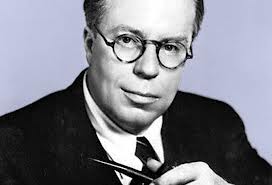
Christopher Morley
wrote for the Philadelphia Evening Public
Ledger in 1918. He turned to novels,
and The Haunted Bookshop is my
favorite. Actually, I had no idea he
wrote poetry. The book I found in Tampa
was not only inscribed, it included a note to David E. Smiley, editor of the Public Ledger. In addition, Morley corrected a
typographical error in his own hand with the same ink as that in the
inscription. As an inveterate
Philadelphian, I doubled the pleasure in finding this book.
The poetry is light,
but Morley had an ability turn a phrase.
Here is one of my favorites, “A Wedded Valentine”: “Dear, may I be your Valentine? / Not just
to-day, in weather fine; / Not just to-day, in lover’s mood, /But through
life’s each vicissitude. // Not just when girlish eyes still shine, / Dear, may
I be your Valentine, / But through all mortal whims and fits / While Time our
human fibres (sic) knits. // And though, most sweet, my peevish earth / Is hardly
such promotion worth, / Dear, May I be your Valentine / And learn to make your
virtue mine? // Recalling by love’s old refrain / Our Double joy, divided pain,
I write this pleading, smiling line-- / Dear,
may I be your Valentine?” (27)
And another short
poem, “The Intruder”: “As I sat, to sift my dreaming / To the meet and needed
word, / Came a merry Interruption / With insistence to be heard. // Smiling
stood a maid beside me, / half alluring and half shy; / Soft the white hint of
her bosom-- / Escapade was in her eye. // ‘I must not be so invaded,’ / (In
anger then I cried) -- / ‘Can’t you see that I am busy? / Tempting creature,
stay outside! // “Pearly rascal, I am writing: / I am now composing verse-- /
Fie on antic invitation: / Wanton, vanish – fly – disperse! // ‘Baggage, in my
godlike moment / What have I to do with thee”’ / And she laughed as she
departed -- / ‘I am poetry,’ said she” (47).
I love these little poems that I can nibble at enjoy in a moment. Here is another, “Tit for Tat”: “I often pass
a gracious tree / Whose name I can’t identify, / But still I bow, in courtesy;
/ It waves a bough, in kind reply. // I do not know your name, O tree / (Are
you a hemlock or a pine?) / But why should that embarrass me? / Quite possibly
you don’t know mine” (50).
 I have always had
greater appreciation for trees after I read The
Wild Trees by Richard Preston a few years ago. But even this little acorn – or should I say
pinecone – of a poem, brings a smile from me.
Among a series of sonnets, he writes this paen to my hometown, “In
Philadelphia”: “I have seen sunsets gild the pillared steam / Where Broad
Street Station hoops with arches dark / The western fire; and seen the looming,
stark / Crags of the Hall grow soft in morning gleam. / One drowsy eve I
wandered far to mark / The neck, a land of opal color-scheme; / And know no
fairer place to watch and dream / Than on a bench in old Penn Treaty Park. //
And there are corners, glimpses, houses, streets, / With curious satisfaction
in the view, / And unconfessed sweet moments when one meets / the destiny of
human life anew. / A city rarely beautiful I know … / It is not men alone who
make it so” (80).
I have always had
greater appreciation for trees after I read The
Wild Trees by Richard Preston a few years ago. But even this little acorn – or should I say
pinecone – of a poem, brings a smile from me.
Among a series of sonnets, he writes this paen to my hometown, “In
Philadelphia”: “I have seen sunsets gild the pillared steam / Where Broad
Street Station hoops with arches dark / The western fire; and seen the looming,
stark / Crags of the Hall grow soft in morning gleam. / One drowsy eve I
wandered far to mark / The neck, a land of opal color-scheme; / And know no
fairer place to watch and dream / Than on a bench in old Penn Treaty Park. //
And there are corners, glimpses, houses, streets, / With curious satisfaction
in the view, / And unconfessed sweet moments when one meets / the destiny of
human life anew. / A city rarely beautiful I know … / It is not men alone who
make it so” (80).
I grew up a short
walk from Penn treaty Park, and the first time I went on a long walk alone, I
found myself at that very spot. I did
sit on a bench to read a bit, not knowing who sat there before me, or that I
would ever stumble on his poems four decades or more later. Almost certainly out of print, Hide and Seek is a gem I will treasure
to the end of my days. 5 stars
-- Chiron, 1/30/16


