Sunday, December 08, 2013

Enon by Paul Harding


In 2010, I reviewed the year’s Pulitzer Prize winning novel, Tinkers by Paul Harding.  For some odd reason, I do not usually follow the Pulitzer, but a friend recommended the book, and I did end up enjoying it very much.  Tinkers tell the story of the last days of George Crosby, a clockmaker.  The psychological insights were profound and really held my attention on every page.  The novel turned out not at all morbid or depressing.  Now, the waning days of 2013 has brought me Harding’s sequel of sorts, Enon, which tells the story of Charles Crosby, George’s grandson.  Harding sprinkles flashbacks to Charles’ adventures with George, and the lessons he learned from him.

Charles and Susan are married with a 13 year-old daughter, Kate.  Charles never finished college, and works as a handyman, landscaper, and painter.  Susan hales from Minnesota of solid Finnish roots.  Harding writes of Susan’s family, “They were always affectionate toward me, but I was certain they were disappointed that their daughter had taken up with me” (13).    

Harding opens the novel with dreadful news, “Most men in my family make widows of their wives and orphans of their children.  I am the exception.  My only child, Kate, was struck and killed by a car while riding her bicycle home from the beach one afternoon in September, a year ago.  She was thirteen.  My wife, Susan, and I separated soon afterward” (3).

I have heard many people say the worst thing any parent can experience is the loss of a child.  I have a son, and I cannot imagine the utter anguish and devastation I would feel if something happened to him.  This novel opens a window on that terrible world, but – spoiler alert – Enon has a reasonably good ending, which I found most satisfying.  All along, I expected the worst to happen to Charles as he spiraled out of control after Susan moved back to her parents’ home.

Before the birth of Kate, the marriage was on the thinnest of ice, but Harding writes, “When Kate was finally born and Susan saw her for the first time, the faraway look in her eyes vanished. […] Kate bound us back together.  Or really, we were each separately fully bound to Kate and thereby to each other through our single, cherished daughter, and that was fine by us.  After all, we did have a sort of real love for one another, or I did for Susan and she had a deep affection for me” (29).

But Kate’s death snapped these tenuous bonds, and Charles was left alone.  He breaks his hand and becomes addicted to painkillers, and sinks further into drug and alcohol abuse.  However, a chance encounter with a friend of Kate’s while contemplating suicide, turns his entire life around.

I never wanted to stop reading this novel.  I kept pulling for Charles.  I wanted to help rescue him.  Harding’s prose constantly reverts to the theme of loss, and in the end, we all realize loss is inevitable -- along with grief and suffering.  Charles overcame his grief, and the novel ends with him well along the road to recovery.

In one poignant scene, Charles and Kate – on one of their many walks in the woods -- searched for an old cabin from Charles’ childhood.  Harding writes, “‘There was an old cabin here when I was a kid, Kate,’ I whispered out loud, still scratching a little at the underbrush with my foot, half-looking for a threshold.  ‘But it’s gone, just disappeared, like it never even existed.’  I turned back to the path and resumed walking” (45).

Unlike the cabin, Charles will never forget Kate.  Even at his worst, the memory of Kate keeps surfacing.  That is what held Charles together and enabled him to get to the point of beginning his acceptance and recovery.  Enon by Paul Harding is an amazing tale of a most difficult subject told with sympathy and grace. 5 stars

--Chiron, 12/8/13

Friday, November 29, 2013

An Appetite for Wonder: The Making of a Scientist by Richard Dawkins


Richard Dawkins leads the charge of the “New Atheism along with Sam Harris, David Dennett, and the recently departed Christopher Hitchens.  Hitchens was either correct  in his beliefs, or he has now found out exactly how wrong he was.

Of the three writers, Hitchens is the most erudite and eclectic, Sam Harris tends to a shade toward pedantic and academic, Daniel Dennett, a philosopher, is interesting and logical without being abrasive, and Dawkins is the scientist, always piling on evidence to support his views.

Of course, Dawkins is most well-known for his 2006 New York Times bestseller, The God Delusion.  In it, he outlined the scientific and philosophical underpinnings of the New Atheism.  One of the most intriguing ideas he put forth was a scale of belief in God.  The scale ran from one – absolute belief in a Deity coupled with a refusal to consider any evidence to the contrary – to seven – an absolute rejection of a Deity coupled with a refusal to consider any evidence to the contrary.  Dawkins places himself at six: no evidence of a deity, but willing to consider any evidence to the contrary.

When his autobiography, An Appetite for Wonder: The Making of a Scientist recently came out, I couldn’t wait to read it.  Unfortunately, the book did not meet my expectations, and I had only a mild interest in a few parts.

Dawkins begins the story with his ancestry, which included a string of seven Anglican Vicars.  He spent his early years in Africa with his parents, who were colonial officials posted there by the British Government.  He finished his education at a private school – known as “public schools” in England, and finished at Cambridge University.  Most of these college years discuss important members of the faculty who mentored and influenced him.  But rather annoyingly, he quoted fragments of numerous drinking songs he recalled with fondness.  He then describes in great detail his dissertation research along with – YIKES! – great gobs of math and statistics.  These chapters left me in the dust. 

I did find the many early pictures of Dawkins, his family, friends, and mentors quite interesting, as was an extensive family tree.
Overall, however, I must say I was disappointed in the story.  Many pages were spent in telling stories of his youth which were neither funny – to me – nor interesting – again to me.  I would love to come across a review praising the book, and now that I have written my own review, I will do just that.

Since the book ended at the first half of his life, so far, I will have to wait for the second volume to completely judge Richard Dawkins autobiography, An Appetite for Wonder: The Making of a Scientist and his talents as a memoirist.  3 Stars

--Chiron, 11/22/13

Cicero: The Speeches by Cicero -- Translated by N.H. Watts


Book fanatics find themselves as subject to impulse buying as any other shopper.  While visiting Blue Bicycle Books in Charleston, SC, I stumbled upon a slim volume I had been thinking about reading recently – The speeches of Cicero, perhaps the greatest Roman orator.  I was particularly interesting in reading “Pro A. Licinio Archia Poeta Oratio” or “The Speech on Behalf of Archias the Poet.”

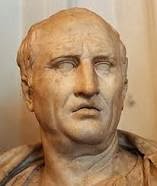
According to the Encyclopedia Brittanica, Marcus Tullius Cicero, sometimes known as Tully, was born 106 bce in Arpinum, Latium (now Arpino, Italy.  He died Dec. 7, 43 bce, in Formiae, Latium (now Formia).  He was a Roman statesman, lawyer, scholar, and writer who vainly tried to uphold republican principles in the final civil wars that destroyed the Roman Republic.  His writings include books of rhetoric, orations, philosophical and political treatises, and letters.  He is remembered in modern times as the greatest Roman orator and innovator of what became known as Ciceronian rhetoric.

My interest in “The Speech on Behalf of Archias” stemmed from his defense of the value of writing, literature, and poetry.  In the brief introduction to this speech, the editor, N.H. Watts comments,

"This speech, slight and unimportant in its occasion and its subject, has attained, by reason of an irrelevant digression artificially, yet withal most artistically, grafted upon it, to a fame and popularity which few of its author’s weightier and profounder efforts have gained.  For it contains what is perhaps the finest panegyric of literature that the ancient world offers us: a panegyric which has been quoted and admired by a long series of writers from Quintillian, through Petrarch, until today, when it has lost none of its luster; and which inspired a great Elizabethan scholar and gentleman to write of poetry that it 'holdeth children from play and old men from the chimney corner; and, pretending no more, doth intend the winning of the mind from wickedness to virtue'” (2).

My copy, published in 1923 and reprinted in 1965, will, I hope, add to this string of uninterrupted admiration through this humble blog.

Archias
Aulus Licinius Archias, was born c. 120 bce, in Antioch, Syria (now Antakya, Turkey).  He was an ancient Greek poet who came to Rome, where he was charged in 62 bce with having illegally assumed the rights of a Roman citizen.  He was defended by Cicero before a court of inquiry.  Apparently, Archias was caught in a political struggle involving Pompeii.

I have so many wonderful passages underlined, I hardly know which to quote, but here goes a few of my favorites:

Cicero said of himself, “I am a votary of literature, and make the confession unashamed; (…) my devotion to letters strengthens my oratorical powers, and these, as they are, have never failed my friends in their hour of peril” (21).

Also, “…let me assume that entertainment is the sole end of reading; even so, I think you would hold that no mental employment is so broadening to the sympathies or so enlightening to the understanding.  Other pursuits not to all times, all ages, all conditions; but this gives stimulus to our youth and diversion in old age;  this adds charm to success, and offers a haven of consolation to failure.  In the home it delights, in the world it hampers not” (25).

And, “Holy then, gentlemen, in your enlightened eyes let the name of poet be, inviolate hitherto by the most benighted of races!  (…) savage beasts have sometimes been charmed into stillness by song” (27).

Cicero
Finally, “Many great men have been studious to leave behind them statues and portraits, likenesses not of the soul, but of the body; and how much more anxious should we be to bequeath an effigy of our minds and characters, wrought and elaborated by supreme talent?” (39).

The other speeches are no less worthy of quotation – particularly his speeches delivered after his return from exile to the Senate and the people, the speech delivered before the College of Pontiffs, and his response to the soothsayers.

These speeches present a gold mine of literature, references, and threads which can be followed in many directions.  5 stars!

--Chiron, 11/9/13

Maru by Bessie Head


I recently reviewed the great Alice Walker novel, Temple of my Familiar.  In this novel, she mentions an African writer Bessie Head.  Most of the time, books and authors mentioned in novels are as fictional as the rest of the story.  I had never heard of Bessie, but something in Walker’s description piqued my curiosity.  I did a search and found numerous websites devoted to this important African writer. 

Bessie Head was born on July 6, 1937, in Natal.  She did not know her parents.  Her mother was a Scottish woman and her father was an unknown Black South African.  As a result of her mixed-race status, she suffered greatly from discrimination by Africans.  In January 1956, at age 18, Bessie received a teaching certificate. She immediately began teaching at the Clairwood Coloured School in Durban.  In June of 1958, she resigned to become a journalist in Durban.  After stints at few newspapers and magazines, she began her own newspaper, The Citizen, which promoted Pan-African views.  In 1964, she left South Africa for a teaching job in Bechuanaland Protectorate, in a village called Serowe.  In late 1965 she began writing seriously with financial help from some writer friends.

In early 1969, she suffered a mental breakdown and was briefly hospitalized.  Surprisingly, this setback had two helpful outcomes. First, the villagers who had resented her now accepted her as crazy and left her alone.  She became calm and creative once again.  A novel, Rain Clouds was published in New York and London, and it received excellent reviews.  With encouragement from new friends, and in a wave of creativity, she began a new novel, Maru, which was published to rave reviews in 1971.  Maru won numerous awards in Africa and Europe.  She had become Africa’s first great woman writer.  Unfortunately, she suffered another breakdown in late 1971 and was again hospitalized.

Once on the road to recovery, she started her most difficult book, A Question of Power. It is an autobiographical novel, using incidents from her early life as well as her recent nightmares.  A Question of Power appeared in October 1973 to immediate praise and acclaim.

A Question of Power is the first of her works I found.  This horrific tale of her breakdowns, nightmares, hallucinations, hospitalization was difficult to read, yet I found myself unable to put it aside.  Over the years I have read a few novels depicting mental illness, but Bessie Head’s work tops them all.  I frequently found myself stopping, reflecting, re-reading paragraphs, and shaking my head at the inhumanity among members of the human race.  This novel is not for the faint of heart.

Maru on the other hand, bears only scant comparison to Question.  This award-winning novel tells a story of an orphan, Margaret Cadmore, raised by a white Englishwoman.  Margaret is lonely, and she suffers discrimination by the dominant tribe in her village, the Botswanans, which considers Margaret and her people, the Masarwa, as “less than human,” “unable to think and reason,” and “so stupid the only blanket they have is to turn their back to the fire.” 


In an interview, Bessie said of Maru, “With all my South African experience, I longed to write an enduring novel on the hideousness of racial prejudice.  But I also wanted the book to be so beautiful and so magical that I, as a writer, would long to read and re-read it” (xii). 

Some of the Botswanans feel the winds of change coming.  Head wrote, “Should [Maru] bother to explain the language of the voices of the gods who spoke of tomorrow?  That they were opening doors on all sides, for every living thing on earth, that there would be a day when everyone would be free and no one the slave of another?” (49).

Enduring and magical are two apt words to describe this work.  Her lyrical descriptions of the people, the village, her friends – and those who fought against her – are as memorable as any novel I have ever read.  5 Stars

--Chiron, 11/9/13